Focused arrival windows
Useful updates and clear arrival timing.

When your water bill jumps and the floor stays warm, you need slab leak detection Nashua NH homeowners can trust. We pinpoint under slab leaks with acoustic listening devices and thermal imaging cameras, then hand you a marked location before anyone touches concrete. Serving Nashua, NH since 2010, we handle copper pipe and PEX failures in ranches, capes, and 1890s mill-era homes alike.
Useful updates and clear arrival timing.
Review the approach and price before deciding.
Equipped vehicles and respectful cleanup.
Neighbors serving neighbors with follow-through.
One flat fee covers the full diagnostic. If the repair is ours to make, we credit part of the detection fee toward it. Here is what is in the visit and what we quote separately.
We shut the main, isolate the water heater, and pressure test each branch separately. This narrows the search to one line before any listening gear comes out of the truck.
A technician walks the slab with an acoustic listening device and ultrasonic leak detector, bracketing the loudest point to a two-foot zone. Copper pipe transmits sound well, so this step is fast.
A FLIR thermal imaging camera reads the warm plume on hot-line leaks, and a moisture meter or tracer gas detector confirms cold-side failures. Two readings before we mark.
We chalk the floor, photograph the mark, and note the line size and pipe material. Your repair contractor gets a target, not a guess.
Same-day summary with pressures, line sizes, and the marked location, formatted for your insurance adjuster. Most Nashua carriers accept it as-is with the claim.
Share what is happening and receive a clear next step from the local team.
Slab leak detection Nashua NH is the diagnostic process that locates a pressurized water line failure beneath a concrete floor without breaking the slab open. We isolate the hot and cold runs, pressurize the system with pressure testing gauges, and listen for the hiss of escaping water through acoustic listening devices. A thermal imaging camera confirms the temperature signature, and a moisture meter verifies the reading. Most homes take 90 minutes to three hours from arrival to a marked floor location.
Nashua's housing stock makes this work specific. The North End and Crown Hill are full of 1920s capes with original copper pipe that has pinhole-fatigued after 90-plus years of Nashua water. Post-1970 builds near Exit 8 often run PEX tubing or thin-wall copper under a poured slab. If you search for how to detect a slab leak in Nashua, the honest answer is that a wet carpet corner, a water bill that doubled, or the sound of running water with every fixture off are the three calls we get most.
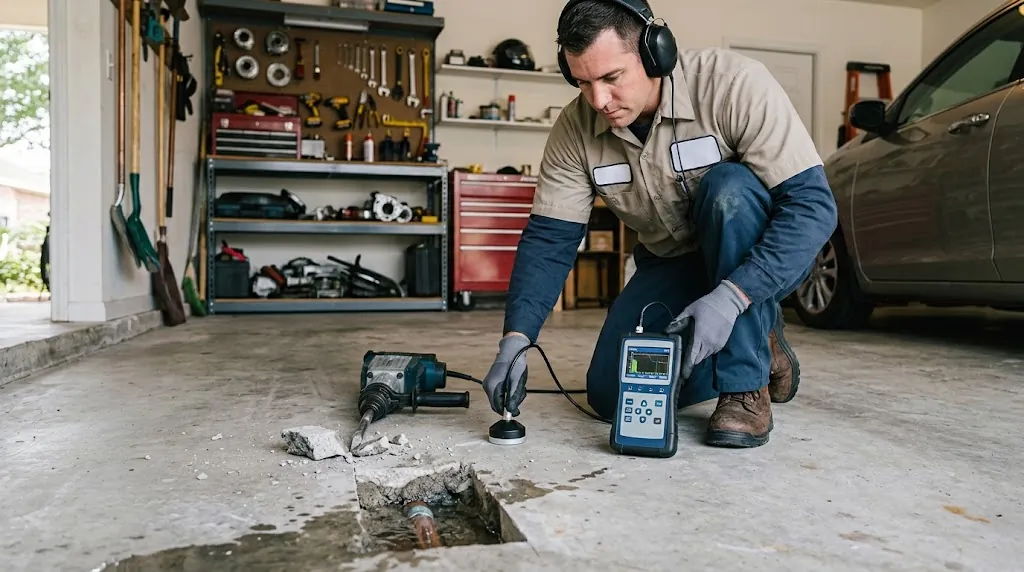
We ask three questions: is the meter spinning with everything off, is a floor spot warm, and has the bill jumped. Your answers tell us whether this is a hot-side or cold-side slab leak before we load the truck. Most calls get a same-day window.
On arrival we shut the main, isolate the water heater, and pressure test the hot and cold branches separately with calibrated gauges. This takes 20 to 30 minutes and tells us which line is losing pressure. No digging yet.
We walk the slab with an acoustic listening device and an ultrasonic leak detector, headphones on, mapping the loudest point. Copper pipe under a slab transmits sound well, so we can usually bracket the leak to a two-foot zone in 15 minutes.
A FLIR thermal imaging camera shows the warm plume a hot-line leak leaves in the slab. We cross-check that reading against a moisture meter and, on cold lines, a tracer gas detector. Two independent confirmations before we mark.
We chalk the floor, photograph the location, and write up the pressure loss, line size, and pipe material. You get the report the same day, and we walk your plumber or restoration crew through it if you want us to.
Headphones and a ground microphone pick up the hiss of pressurized water escaping under the slab. This is the fastest way to bracket a leak to a two-foot zone.
Infrared scanning reveals the warm plume a hot-line leak leaves in the concrete. It confirms the acoustic hit and shows the extent of the temperature spread.
Calibrated pressure gauges and ultrasonic detectors give us repeatable readings. We log the numbers so your repair contractor knows exactly what failed.
When a drain or sewer line is the suspect, we camera it to separate a gravity leak from a pressurized slab failure before any concrete comes up.
For cold lines and non-metallic pipe, we introduce a safe tracer gas and sniff the slab surface. It confirms leaks thermal gear cannot see.
Pin and pinless meters map the wet footprint across the slab and baseboards, telling us how far the water has traveled from the source.
When a small access hole is needed for confirmation, we cut clean and controlled. No sledgehammers, no unnecessary damage.
We close the main, isolate the water heater, and pressurize the hot and cold branches separately. A dropping gauge tells us which line is losing water before we sweep a single foot of floor.
Two independent technologies have to agree before we mark. Acoustic finds the sound, thermal finds the heat, and the overlap is where we chalk the floor. That cross-check is why our marks land within a few inches.
On cold lines, or where pipe is PEX tubing or PVC pipe, we introduce a safe tracer gas and scan the surface. It confirms a leak that leaves no thermal signature and no audible hiss.
Every report notes line size, pipe material, and pressure loss, and follows NH plumbing code conventions. Your repair contractor can pull the right copper pipe or PEX and fittings without a second site visit.
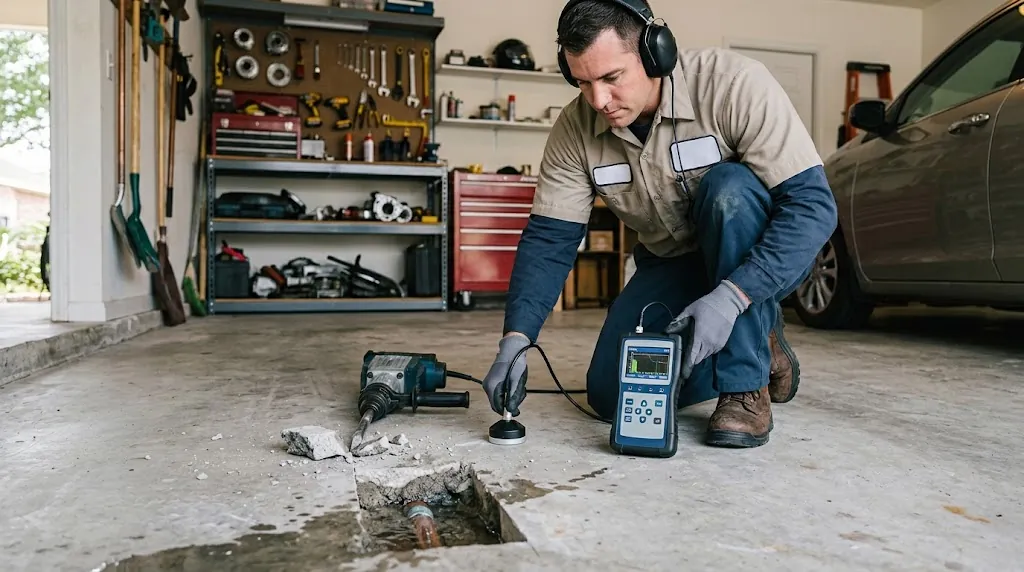
We isolate the hot side, run acoustic and thermal together, and mark a pinhole within a few inches. The repair crew opens one small patch instead of the whole hallway. Water loss stops the same day, and the repair bill stays under $1,800 instead of the $6,000 a full trench would have cost.
We schedule after hours, pressure test the domestic and sprinkler mains separately, and pinpoint the line with an ultrasonic detector while the store is closed. The store opens on time, the leak is isolated, and the repair is a single saw-cut rather than a bay-wide demolition.
Thermal imaging confirms a hot-line leak, acoustic gear brackets it, and we mark the floor. We also flag the aging copper run for a future repipe conversation. The leak is fixed in one visit, and the homeowner has a documented report for the insurance claim on the buckled flooring.
We moisture-map the slab, rule out roof and foundation leaks, and use tracer gas to confirm a cold-line failure under the lower level. The source is confirmed without exploratory demolition, and the restoration crew dries the space with a known target.
Nashua sits in Hillsborough County with a freeze-thaw cycle that stresses buried pipe every winter. The city's housing stock splits into two camps: pre-1950 homes in Crown Hill, French Hill, and the Tree Streets with original copper pipe that has pinhole-fatigued, and post-1970 slab-on-grade builds near Exit 8 and Nashua Highlands running PEX tubing or thin-wall copper. Both fail, but they fail differently. Copper gives you a warm floor and an audible hiss. PEX and PVC pipe often fail at a fitting with no thermal signature, which is where tracer gas detectors earn their keep. We run under slab leak detection Nashua calls year-round, with a spike in February when frozen ground shifts lines and a second spike in June when irrigation systems pressurize. If you need emergency slab leak detection Nashua New Hampshire service, we hold 24/7 slots and answer the phone at 2 a.m. Our flat detection fee covers the full diagnostic, and we credit part of it toward the repair when the fix is ours.
Dense 1920s housing with original copper under slab. Pinhole leaks are common, and the tight lots mean we often work from the street side.
Mix of capes and ranches. Many have had one repipe already, so we check for both new PEX runs and abandoned copper still under the slab.
Older mill-era homes with shallow slabs and high water tables after spring rain. Moisture readings here need a baseline before we call anything a leak.
1970s to 1990s slab-on-grade builds. Failures cluster at fittings and at the transition from copper to PEX, and thermal gear often reads clean.
Larger lots with longer underground runs. When the meter spins and the slab reads dry, the main service line is usually the culprit, not the slab.
Frozen ground shifts buried lines and opens pinholes at fittings. February is our busiest month for active slab leaks, and we keep emergency slots open.
A wet slab does not always mean a leak. We take baseline moisture readings and compare them to a dry reference point before we mark anything.
90-year-old copper fatigues at elbows and under slab. We flag failing runs during detection so you can plan a repipe before the next pinhole.
Sprinkler and irrigation breaks mimic slab leaks. We isolate those zones first so you are not paying for slab work you do not need.
A 1958 ranch had a warm kitchen floor and a water bill up 45 percent over two months. The homeowner had two plumbers out, both recommending a full hallway trench. Nobody had pinpointed the leak.
We isolated the hot branch, swept the slab acoustically, and confirmed with thermal imaging. The mark landed within four inches of the pinhole. The repair crew opened one 14-inch patch and the bill dropped back to normal the next cycle.
Maintenance: We flagged the rest of the original copper run and recommended a pressure check every 18 months. Catching the next pinhole early keeps the repair small.
A retail bay on Amherst Street had a wet display wall and a rising water bill. The store could not close for a multi-day trench, and the property manager needed a target fast.
We worked after hours, pressure tested the domestic and sprinkler mains separately, and pinpointed the failure with an ultrasonic detector. The repair was a single saw-cut and patch, and the store opened on schedule the next morning.
Maintenance: We set up an annual after-hours slab scan for the property. One detection visit a year is cheaper than one emergency trench.
A 1928 cape had a musty basement smell and a damp carpet edge. Thermal gear read clean because the leak was on the cold side, and two prior contractors had found nothing.
We moisture-mapped the slab, ruled out roof and foundation leaks, and used tracer gas to confirm a cold-line fitting failure. The mark was accurate to six inches, and the restoration crew dried the space with a known target.
Maintenance: We recommended a moisture check each spring after the water table rises. Early readings catch a cold-line leak before the carpet wicks.
Every slab leak starts small and gets expensive. Here are the four we get called for most, and what happens if they sit.
A pinhole under a slab can bleed 20,000 to 60,000 gallons a month. Left alone, you pay for water you never use and the subgrade stays saturated. We isolate the branches, pressure test, and sweep the slab with acoustic gear. Once we mark the leak, you can shut that branch and stop the loss the same day.
A hot-line slab leak heats the concrete from below. The spot spreads, the slab stresses, and tile or vinyl starts to lift at the edges. A FLIR thermal camera confirms the plume in minutes. We map the extent, mark the source, and hand your plumber a target so the repair is one small patch.
That hiss is pressurized water escaping under the slab. It runs 24/7, erodes the subgrade, and can undermine a foundation footing over a season. Acoustic listening devices pick up the hiss and bracket it fast. We confirm with pressure testing, then isolate the line so the noise and the loss stop.
Moisture wicking up through the slab feeds mold and rots baseboards. In older French Hill homes, it also softens the mortar under original tile. We moisture-map the floor, rule out roof and foundation leaks, and pinpoint the slab source. You get a marked location and a report your restoration crew can work from.
Our water bill doubled in two months and I could not find a thing. These guys pressure tested the hot side, swept the hallway, and marked a spot within a few inches. My plumber opened one 14-inch patch and there was the pinhole in the copper. No way I would have found that myself.
Warm spot on the kitchen tile for weeks. They showed up same day, ran the thermal camera, and confirmed a hot-line leak under the slab. The report went straight to my insurance and the claim moved fast. Professional, clean, and they explained every step.
We manage six commercial slabs on Amherst Street and use Nashua LeakDetectors for all of them. They schedule after hours, pinpoint the line, and hand us a marked floor plan. Last call saved us from trenching an entire retail bay. That is the whole value right there.
Most residential slab leak detection in Nashua runs $350 to $650 in 2026, flat rate, including the pressure test, acoustic sweep, and thermal confirmation. Larger homes with multiple wet walls or commercial slabs run $650 to $1,200. The fee covers the diagnosis and the marked location, and we credit part of it toward the repair when we do the fix.
We isolate the hot and cold branches, pressure test each one, then sweep the floor with acoustic listening devices and an ultrasonic leak detector. A FLIR thermal imaging camera confirms the hot-side signature, and a moisture meter or tracer gas detector confirms the cold side. Two matching readings, then we chalk the floor. The whole visit usually takes 90 minutes to three hours.
Detection itself is usually out of pocket, but the resulting water damage and access repair are commonly covered under New Hampshire homeowners policies. Our written report with photos, pressures, and the marked location gives your adjuster what they need. Call your carrier before the concrete comes up, and keep the report with your claim number.
The four we see most: a water bill that jumps 30 percent or more with no change in use, a warm spot on a tile or vinyl floor, the sound of running water with every fixture shut off, and a damp carpet edge or baseboard. In older Crown Hill and French Hill homes, a cracked floor tile or a musty smell near a wall is often the first clue.
Not seeing your question? Our local team can help you understand urgency, scheduling and what to expect.
Ask the local team
Whole-home leak surveys for Nashua houses, covering hidden pipe leaks, water heater leaks, and fixture drips. We often run this alongside slab leak detection when the meter is spinning but the slab reads dry.
View service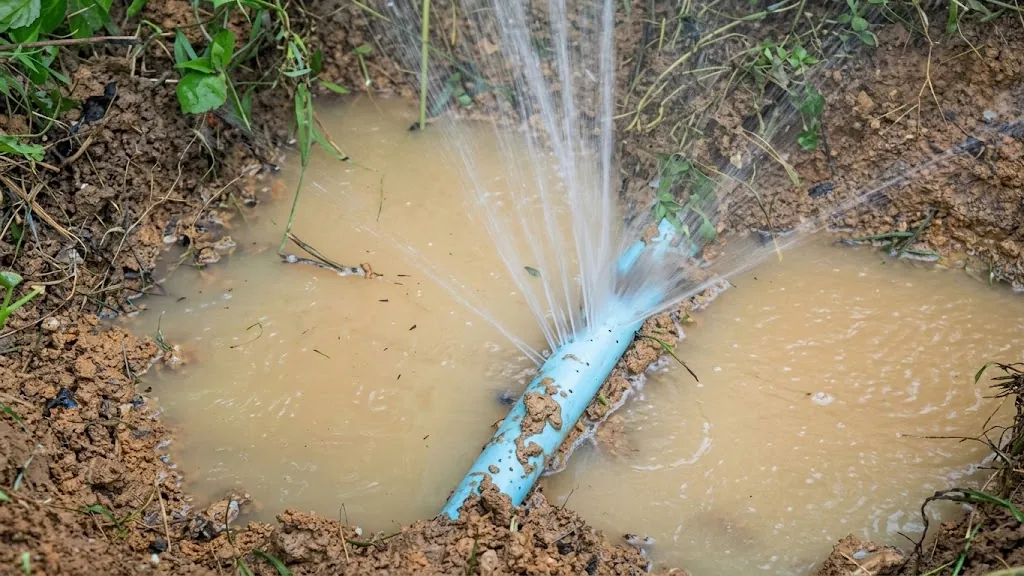
Retail and office slabs on Amherst Street and the Nashua Mall Area carry heavier pipe loads. We schedule after-hours detection so your business stays open while we pinpoint the line.
View service
Pool plumbing sits in the same soil as your slab lines. If a Nashua pool loses an inch a day and the slab reads wet nearby, we test both systems in one visit.
View service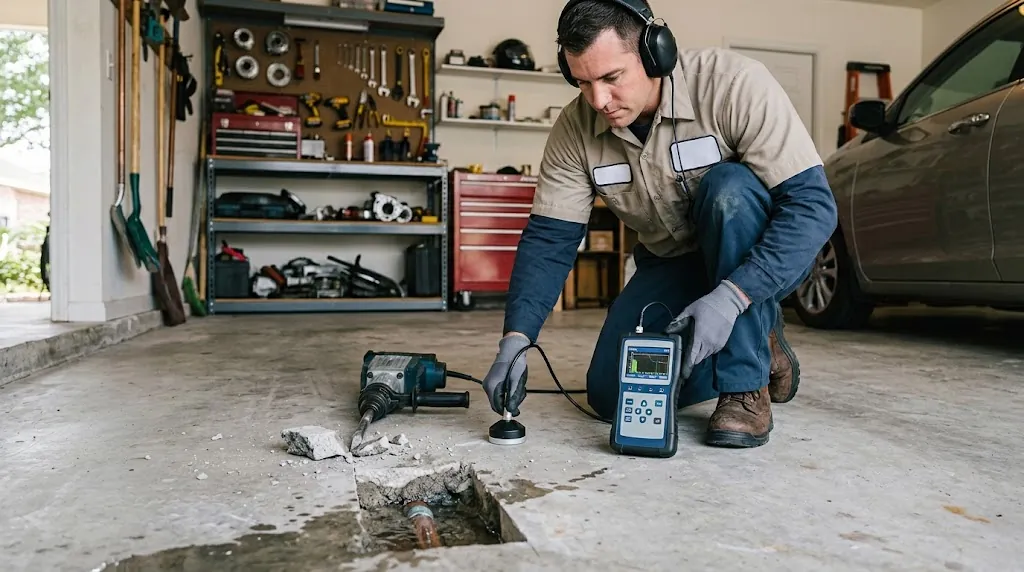
Supply and drain leaks above the slab, from faucet cartridges to toilet flanges. We rule these out first so you are not paying for slab work you do not need.
View serviceCall 603 571 4078 any hour, day or night, and a real person answers. We schedule same-day appointments for most leak calls in Nashua and the surrounding Hillsborough County area, and we confirm your window before we roll a truck.