Focused arrival windows
Useful updates and clear arrival timing.
If you smell gas, that is not a wait-and-see problem. Our gas line leak detection Nashua NH team pinpoints the source with electronic leak detection equipment and tracer gas detectors, then makes the line safe. We serve homeowners and businesses across Nashua, New Hampshire, from French Hill to the South End. Call 603 571 4078 and we roll.
Useful updates and clear arrival timing.
Review the approach and price before deciding.
Equipped vehicles and respectful cleanup.
Neighbors serving neighbors with follow-through.
Every gas call gets the same core scope: safety check, pressure test, electronic sweep, pinpoint location, repair, and a final retest. Repairs and part replacements are quoted after we find the failure. Here is what is covered.
We isolate the gas run and pressurize it to 10 PSI with a calibrated pressure testing gauge. The line holds for 15 minutes minimum. If the gauge drops, there is a leak and we keep hunting. You get the documented result.
Every joint, valve, and appliance connector gets swept with electronic leak detection equipment and an ultrasonic leak detector. We do not just check the spot you called about. Hidden failures nearby get caught before they turn into a second service call.
Once we have a signal, we narrow it with thermal imaging or a pipe inspection camera and mark the exact spot with tape. You see where the problem is before we open anything. That is how we avoid tearing up a whole floor.
We cut out the failed section and replace it with copper pipe or PEX tubing to New Hampshire code. Fittings get pipe sealant or plumber's tape as specified. Every repair meets NFPA 54 requirements and passes our retest.
After the line holds pressure, we restore gas and relight your water heater, furnace, and range with you present. We check each appliance for proper ignition and flame before we leave. No cold showers because someone forgot the pilot.
You get the pressure test result in writing, including the PSI held and the duration. Useful for insurance, real estate closings, and your own records. If you ever need to prove the line was tested, you have the paperwork.
Share what is happening and receive a clear next step from the local team.
Gas line leak detection Nashua NH is the process of finding where natural gas or propane is escaping from a pipe, fitting, or appliance connection before it becomes a fire or health hazard. We start by shutting off the supply, then pressurize the line and watch a pressure testing gauge for drop. From there we sweep the run with electronic leak detection equipment, an ultrasonic leak detector, and a tracer gas detector when the line is buried. Every joint, valve, and appliance connector gets checked, not just the spot you called about.
Nashua has a lot of older housing stock, and that is where most of our gas leak calls come from. Copper pipe that has been sitting in a damp basement for decades, PEX tubing with a bad crimp ring, or a water heater connection that was never sealed right. Cold snaps make it worse, because frozen ground shifts and stresses underground runs. If you need gas leak detection Nashua homeowners trust in February, we have done that call hundreds of times. Same for a propane leak detection Nashua job out past the Nashua Mall Area.

We answer 24/7 and walk you through shutting off the gas at the meter or tank. We ask what you smell, where, and when it started. If you have a propane system, we tell you to kill the tank valve. This call takes 5 to 10 minutes and it keeps your family safe while we drive.
A licensed technician arrives with a combustible gas detector and confirms the atmosphere is safe to work in. We ventilate the space if needed. We do not start diagnostics until the air reads clear. This step takes 10 to 15 minutes on a typical Nashua home.
We isolate the gas run and pressurize it to 10 PSI with a pressure testing gauge. A drop over 15 minutes confirms a leak. Then we sweep the line with electronic leak detection equipment and an ultrasonic leak detector, joint by joint, until we hear or read the failure point.
Once we have a signal, we narrow it with a thermal imaging camera or a pipe inspection camera for hidden runs. We mark the exact spot on the floor or wall with tape. You see the location before we open anything up. This is where the guesswork ends.
We cut out the failed section, replace it with copper pipe or PEX tubing to code, and seal with pipe sealant or plumber's tape as the fitting requires. Then we retest the whole run at 10 PSI for 15 minutes. If it holds, we restore gas and light the appliances with you present.
Locates buried and slab gas leaks by reading tracer gas at the surface. No excavation needed to find the failure point.
Spots temperature anomalies from escaping gas and hidden moisture behind drywall, tile, and concrete. Non-invasive and fast.
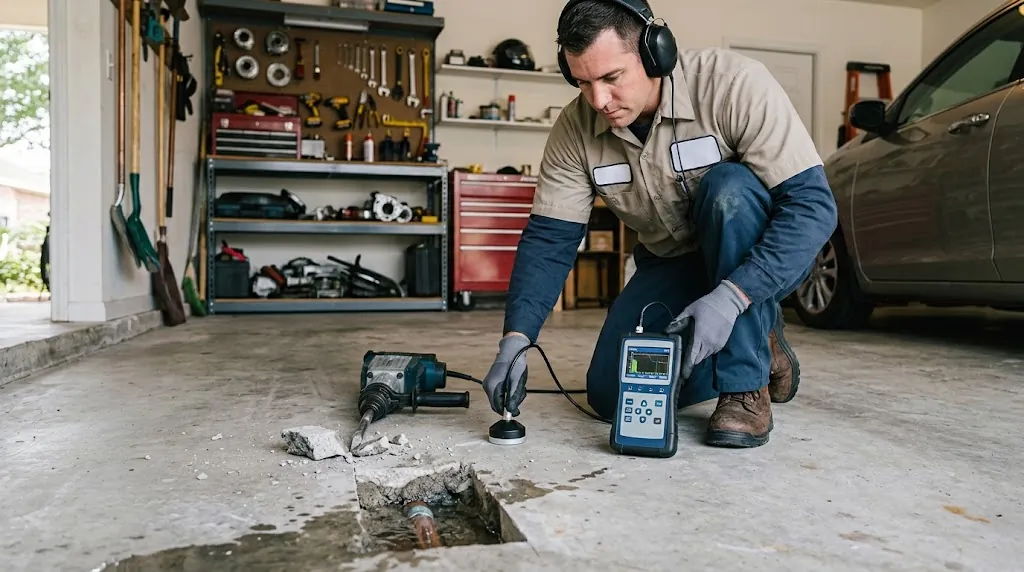
Picks up the high-frequency hiss of gas escaping a pinhole or cracked fitting inside wall cavities and underground runs.
Confirms whether a gas run holds at 10 PSI for 15 minutes. Every repair ends with this test before service is restored.
Lets us see inside gas runs, chases, and drains to confirm the failure point before we open anything.
Converts the sound of escaping gas into an audible signal. Works well in noisy mechanical rooms and commercial kitchens.
Checks for water intrusion near gas lines. Corrosion from a hidden water leak is a common cause of gas pipe failure.
We follow National Fuel Gas Code for every test: isolate the run, pressurize to 10 PSI, and hold for 15 minutes minimum. If the gauge moves, we keep looking. The result gets documented in writing for your records.
For buried lines and slab runs, we inject a tracer gas into the isolated section and read it at the surface with a Sewerin detector. This locates the leak without digging up the yard or breaking the slab.
We use multiple acoustic sensors to triangulate the leak location on long runs. Combined with pressure testing, this narrows the search from a whole basement to a few inches of pipe.
A FLIR camera sweep of the suspect area reveals temperature differences caused by escaping gas and by hidden water leaks. It is the fastest way to rule areas in or out before we open a wall.
We test the range connector, the shutoff valve, and the supply line behind the wall. Most of these are a loose fitting or a failed flexible connector. We replace the part, pressure test the run at 10 PSI, and check the burner flames before we leave. You cook dinner that night without the smell. The line is documented as leak-free.
We run propane leak detection Nashua service on the tank regulator, the buried line to the house, and every interior connection. Tracer gas detectors locate buried failures without excavation. We repair the failed section and retest the whole system. Tank pressure stabilizes and your refill schedule goes back to normal.
We run a full gas line inspection: pressure test, appliance connector check, and a sweep of every accessible joint. You get written test results for your file. If we find a failure, we quote the repair before closing so there are no surprises. You close with a documented, leak-free gas system and a repair price in hand if anything needs work.
We respond 24/7, secure the meter, and test the riser and each unit's appliance connections. Thermal imaging and acoustic gear narrow the location without disturbing tenants. We document everything for your records and your insurer. The leak is found and repaired, tenants are back to normal, and you have the paperwork to prove it.
Nashua's housing stock ranges from 1890s colonials in Crown Hill and French Hill to new builds off Exit 8, and the gas systems are just as varied. Older homes often have original copper pipe in damp basements, which corrodes at fittings and valves. Newer construction uses PEX tubing, where a bad crimp ring can leak from day one. Winter is our busiest season: frost drives ground movement, buried lines stress, and we get a wave of underground gas leak calls in January and again during the March thaw. Summer brings its own pattern, with propane leak detection Nashua calls at pool heaters and outdoor kitchens. If you need affordable gas line leak detection Nashua, we quote the detection price upfront and handle the repair in the same visit whenever parts allow. We work to New Hampshire gas code and NFPA 54 on every job, and we document the pressure test result before we restore service.
Lots of 1890s homes with original basement gas piping. Corroded fittings here are our most common repair.
Dense older housing with shared walls. A leak in one unit can migrate, so we test the full run, not just the reported spot.
Frost movement cracks gas lines at foundation penetrations. We see this every January and March.
Newer construction with PEX gas runs. Bad crimp rings and unsealed appliance connectors are the usual culprits.
Commercial kitchens and mixed-use buildings. We run after-hours gas checks so businesses do not lose a service day.
Ground movement stresses buried gas lines and cracks fittings at wall penetrations. We see a spike in underground leak calls from January through March.
Moisture corrodes copper gas piping and valves over decades. Most hidden leaks in Crown Hill and French Hill basements trace back to corrosion, not impact damage.
Gas lines in Main Street District buildings often share chases with water and sewer. We test all three systems when the source is unclear, so you get the right diagnosis.
Homes on propane need tank, regulator, and buried line checks, not just interior piping. We handle the full run from tank to appliance.
A homeowner in Crown Hill had smelled gas in the basement for three weeks. Two plumbers checked the water heater and found nothing. The smell got stronger every cold snap, and the family stopped using the basement entirely.
We pressure tested the run and found a slow drop. A thermal sweep and acoustic listening narrowed it to a pinhole in a copper line behind a finished wall. One small cut, repair, retest at 10 PSI for 15 minutes. The smell was gone the same day.
Maintenance: We recommended an annual pressure test on the full run, since the rest of the basement piping is the same age. One call a year catches corrosion before it becomes a leak.
A French Hill rental unit had a gas odor near the water heater. The tenant had been opening windows for a week. The landlord could not get a plumber out for four days, and the tenant was ready to withhold rent.
We responded the same evening, shut the gas off, and found a cracked flexible connector at the water heater. Replaced it with a code-correct connector, pressure tested the line, and relit the heater. Total on-site time was under two hours.
Maintenance: We told the landlord to have the connector checked at every water heater service. Flexible connectors have a service life, and replacing them on schedule prevents this call.
A homeowner near Exit 8 noticed a higher gas bill for two months with no change in usage. The utility confirmed a leak somewhere on the property but could not pinpoint it. Digging up the whole yard was the only option they offered.
We injected tracer gas into the isolated buried run and read it at the surface with a Sewerin detector. The leak was marked within 18 inches. We exposed one small section, repaired the failed fitting, and retested the full line at 10 PSI. The yard was back to normal in a day.
Maintenance: We suggested a pressure test each fall before the heating season. A slow leak shows up on a gauge long before it shows up on a bill.
These are the calls we run most often in Nashua. Each one has a clear cause and a clear fix. If you searched for how to check for a gas leak in Nashua, start here.
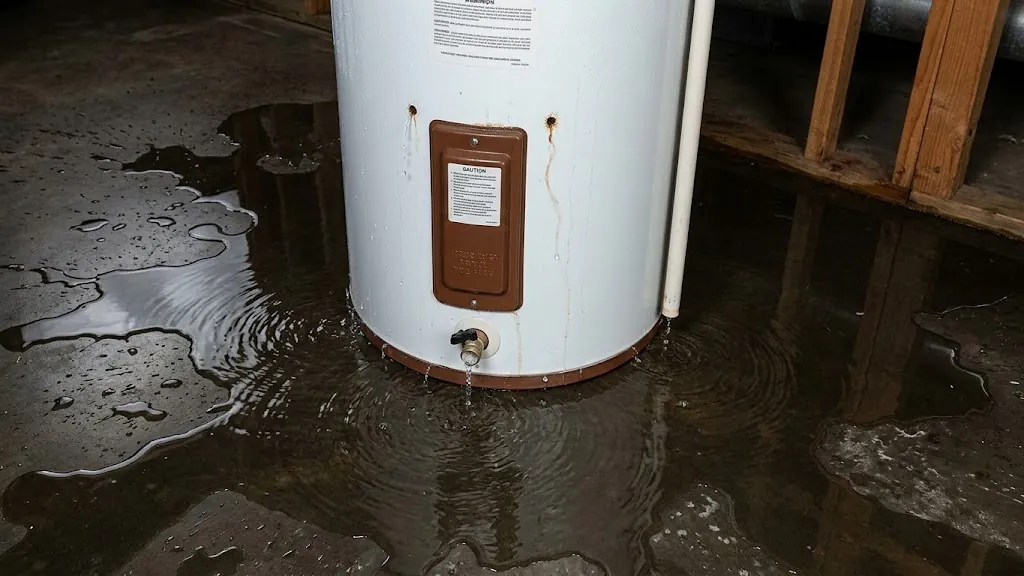
A failed connector or sediment trap can leak steadily for months. The smell gets worse in winter when the basement is closed up, and a small leak can become a serious hazard. We pressure test the appliance connection first, then sweep the supply line. Most of these are a bad connector or a cracked fitting at the valve. We replace the failed part, retest at 10 PSI, and relight the heater the same day.
Hidden leaks in wall cavities or under slabs are the hardest to find. Homeowners often live with the smell for weeks because two other plumbers could not locate it. We use thermal imaging, acoustic listening devices, and tracer gas detectors to narrow the location without opening walls. Once marked, we make one small access cut, repair the line, and pressure test the full run before restoring service.
A slow leak bleeds gas 24/7. Over a heating season, that can add hundreds of dollars to your bill and put constant stress on the system. We run a full pressure test on the entire gas run, not just the appliances. A slow drop over 15 minutes tells us there is a leak even when we cannot smell it. Then we sweep with electronic detection gear until we find it.
Frozen ground shifts and stresses buried gas lines. We see a spike in underground leaks every January and again in March when the thaw hits. Left alone, these can migrate into the foundation. We use tracer gas detectors and acoustic gear to locate buried failures without digging up the yard. Then we expose only the failed section, repair it to code, and retest. Most of these are done in a single day.
Smelled gas near the water heater on a Sunday night. Called at 9 p.m. and a tech was here before 10:30. He shut the gas off, pressure tested the line, and found a cracked fitting on the connector. Fixed it that night and retested. Flat price, no weekend gouge. I have already told two neighbors.
We had a gas smell in the basement for weeks and two other plumbers could not find it. Nashua LeakDetectors used a thermal camera and an acoustic detector and had it marked in 40 minutes. It was a pinhole in a copper line behind the finished wall. One small cut, repaired, tested, done. Worth every dollar.
We manage a six-unit building and needed gas leak detection for a commercial inspection. They tested every appliance connector, documented the pressure test, and gave us a report for the file. Clean work, no drama, and they worked around our tenants. We use them for all our leak calls now.
Most residential gas line leak detection in Nashua runs $185 to $450 in 2026, depending on line length, whether the run is buried, and how hard it is to access. Emergency after-hours calls add a dispatch fee. Repairs are quoted separately once we know what failed. You get the detection price before we start, so there is no meter running while we work.
Leave the house first, then call 911 or the gas utility from outside. Do not flip light switches, use a phone indoors, or start a car in the garage. Once the utility secures the meter, call us at 603 571 4078 for gas leak detection Nashua. We confirm the source, repair the line, and pressure test it before restoring service. Do not re-enter until the air reads clear.
Yes, in most cases. We use acoustic listening devices, ultrasonic leak detectors, and thermal imaging cameras to locate the failure point through finished surfaces. On buried exterior runs we use tracer gas detectors. We mark the exact spot before opening anything, so you get one small access cut instead of a demolished wall or floor.
Call 911 or your gas utility first if you smell gas right now. For detection and repair, call a licensed plumber. Nashua LeakDetectors has handled gas line leak detection Nashua NH calls since 2010, holds a NH Master Plumber License, and runs 24/7. Reach us at 603 571 4078. We serve all of Hillsborough County.
Not seeing your question? Our local team can help you understand urgency, scheduling and what to expect.
Ask the local team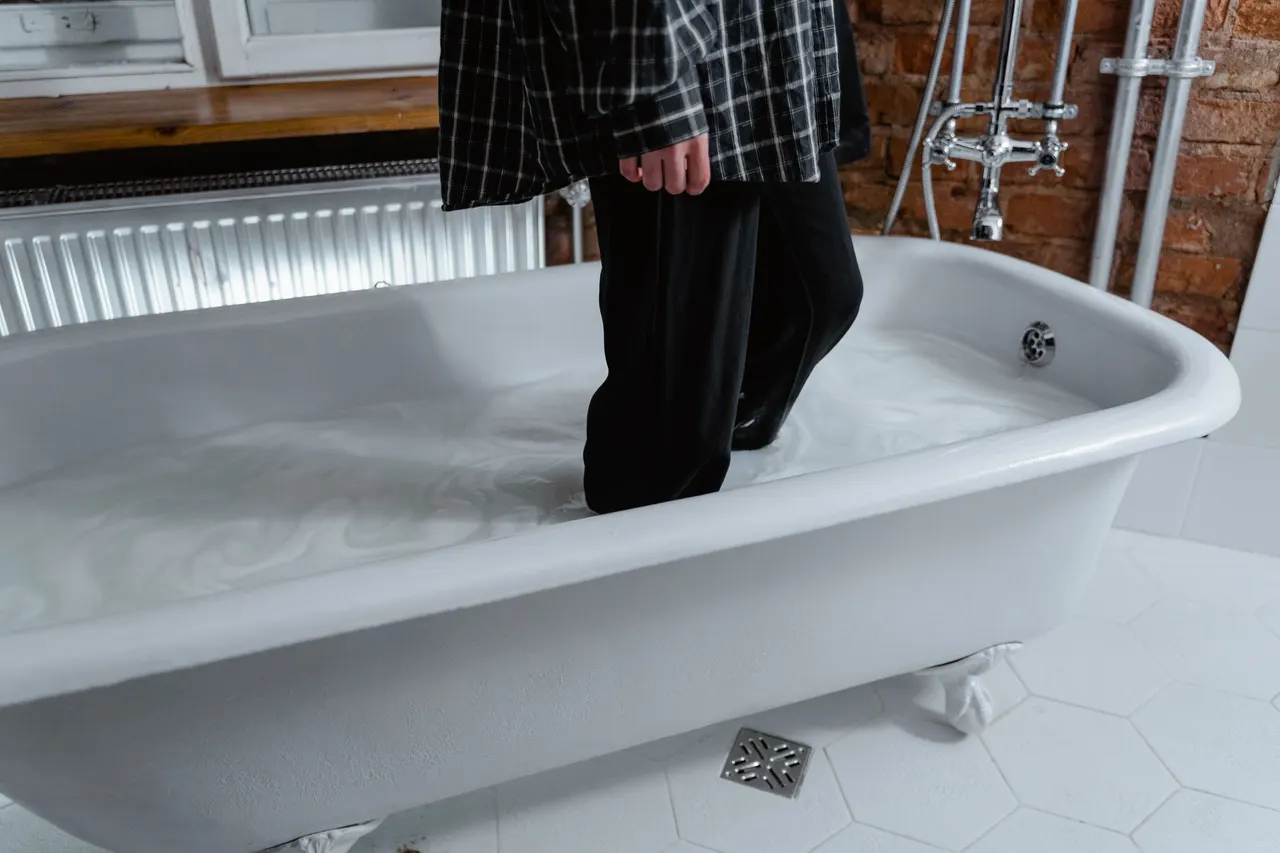
Most of our gas line work starts as a residential call. If you smell gas near a water heater or furnace, we check the appliance connection and the supply line in one visit. We also scan for water leaks while we are in the basement, since both problems often show up together in older Nashua homes.
View service
Restaurants and shops along Main Street District run commercial gas equipment that needs annual leak checks. We test manifolds, shutoffs, and appliance connectors after hours so you do not lose a service day. Same detection gear, documented results for your files and your insurer.
View service
A slab leak and a gas leak can both show up as a hot spot or a damp patch on a concrete floor. We use thermal imaging to tell them apart before we cut. If the gas run is under the slab, we pinpoint it with acoustic gear and open only the section we need.
View servicePool heater gas lines fail at the same fittings as any other run. If your heater smells or will not stay lit, we pressure test the supply line and check the connector. We also trace water loss in the pool shell while we are on site, so one visit covers both systems.
View service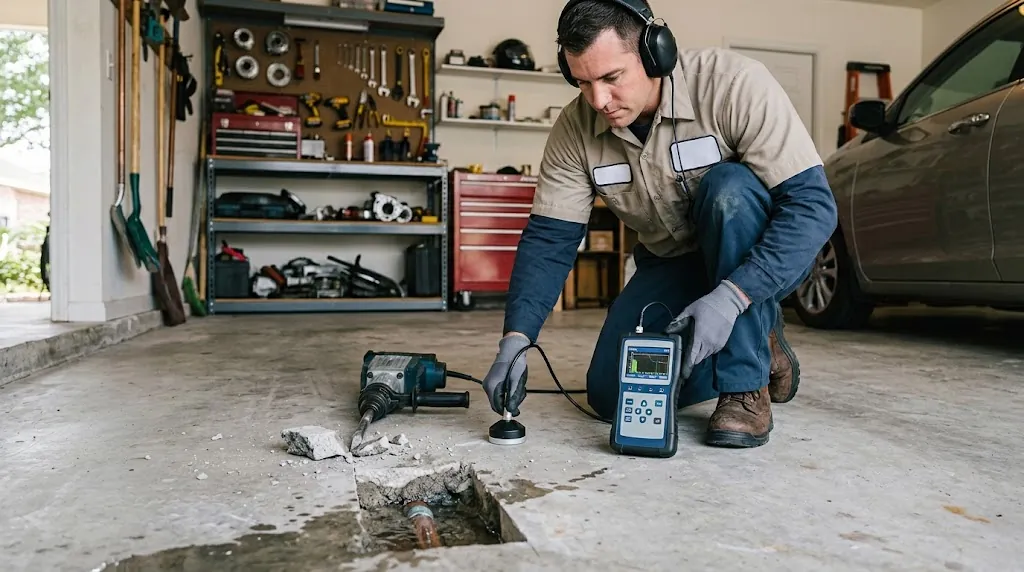
Call 603 571 4078 any hour, day or night, and a real person answers. We schedule same-day appointments for most leak calls in Nashua and the surrounding Hillsborough County area, and we confirm your window before we roll a truck.