Focused arrival windows
Useful updates and clear arrival timing.
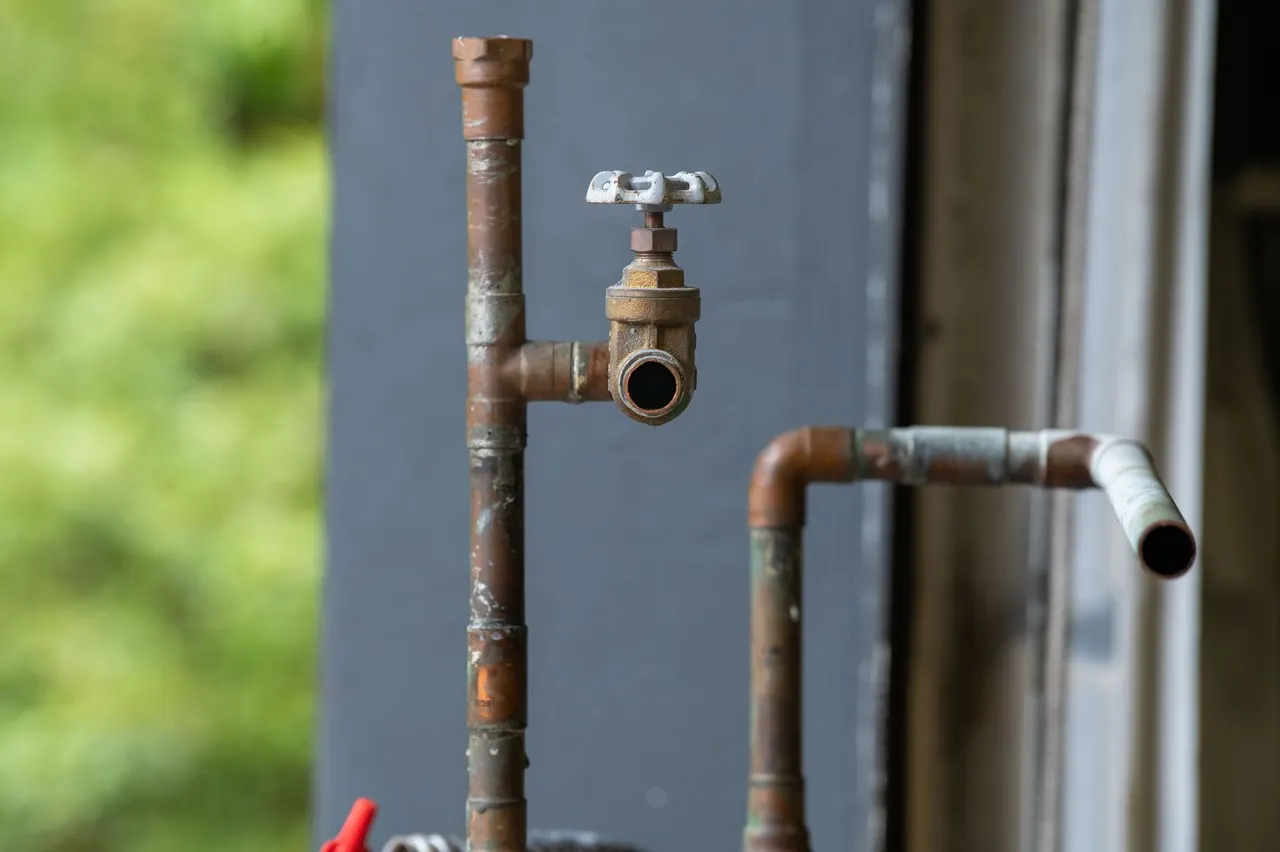
Foundation leak detection Nashua NH is the fastest way to find water entering your basement, crawl space, or slab before it warps framing and ruins stored belongings. We serve homeowners and property managers across Hillsborough County with non-invasive tools, and we pair every inspection with foundation leak repair Nashua options so you get one clear plan. Call 603 571 4078.
Useful updates and clear arrival timing.
Review the approach and price before deciding.
Equipped vehicles and respectful cleanup.
Neighbors serving neighbors with follow-through.
Every foundation leak detection Nashua NH visit covers a full exterior and interior sweep with the tools needed to confirm the source. Repair is quoted separately, and you approve it before we start. Here is what is in the standard inspection.
We walk the perimeter, check grading and downspout discharge, and note every visible crack or stain. Soil saturation around the foundation tells us a lot before we go inside. This step takes about 20 minutes and often identifies the cause on its own.
Moisture meters run along the sill plate, floor joists, and base of every wall in the affected area. We mark each reading on a sketch so you can see the wet zone. Thermal imaging cameras confirm what the meters find.
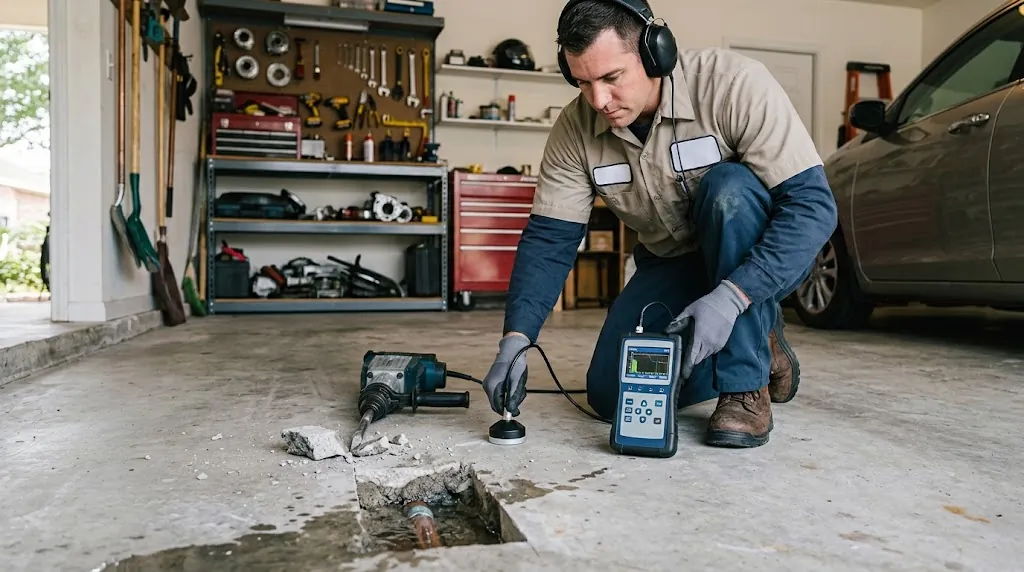
Acoustic listening devices and ultrasonic leak detectors let us hear pressurized water through concrete. We narrow the search to a few square feet before we recommend any opening. This is what keeps the repair small.
When the source is a buried line, we isolate the run with pressure testing gauges and watch for a drop. A falling needle confirms the leak is in that section. It is the step that prevents opening the wrong part of a slab.
You get a same-day report showing the confirmed location, moisture readings, and photos. It includes a repair scope with pricing if you want us to do the work. The report is yours to keep even if you get a second opinion.
Share what is happening and receive a clear next step from the local team.
Foundation leak detection Nashua NH is a diagnostic service that pinpoints where water is entering or pooling around a foundation using non-destructive tools instead of guesswork and demolition. We start with a visual walk of the exterior and interior, then run moisture meters along the sill plate, floor joists, and slab edges. From there we use acoustic listening devices and thermal imaging cameras to trace the source, whether it is a failed footing drain, a hairline crack in poured concrete, or a pinhole in copper pipe running under the slab. You get a written location and a repair path the same day.
Nashua sits on a mix of glacial till and clay-heavy soils that hold water after every heavy rain, and our winters swing from 0 degrees to 40 degrees in a single week. That freeze-thaw cycle opens foundation cracks that were tight in October. In older Crown Hill and French Hill homes with stone or block foundations, water often enters at the cove joint where the wall meets the floor. If you have been searching for foundation leak detection near me Nashua NH, we cover every ZIP from 03060 to 03064 and can usually be on site the same day you call.
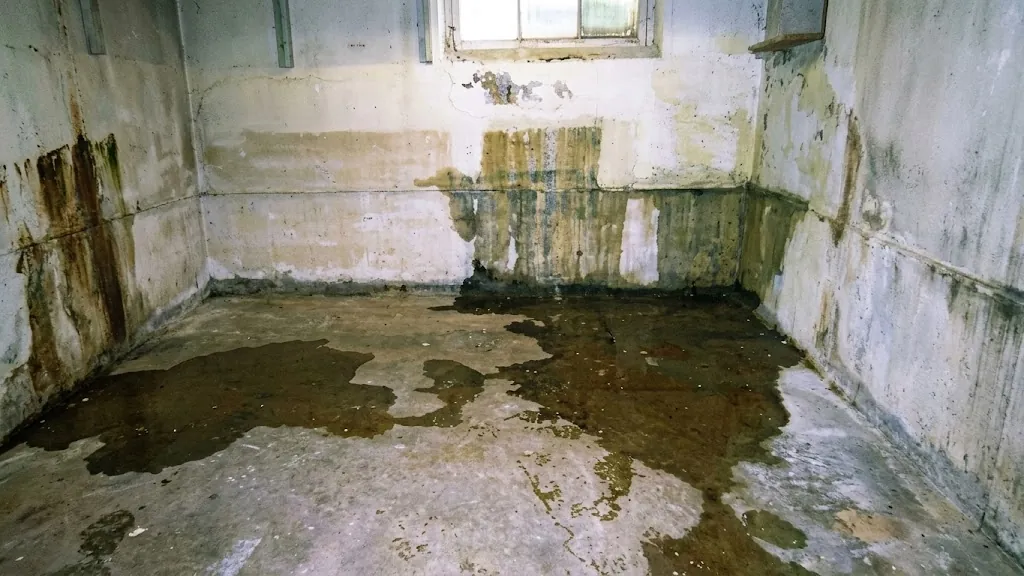
We ask three questions: where you see water, when it appears, and whether it follows rain or runs constantly. That tells us whether to bring slab equipment or exterior drainage tools. You get a two-hour arrival window and a flat inspection price before we hang up.
Our technician walks the foundation perimeter, checks grading, downspout discharge, and any visible crack pattern. We note soil saturation and look for the low spot where runoff collects. This step takes about 20 minutes and often explains the whole problem before we go inside.
Inside, we run moisture meters along the base of walls, sill plates, and floor joists, then sweep the slab with a thermal imaging camera. Temperature differences of 3 to 5 degrees reveal where water is moving behind finishes. We mark each reading on a floor sketch.
Acoustic listening devices and ultrasonic leak detectors let us hear the leak through concrete. If the reading is ambiguous, we isolate the line with pressure testing gauges and watch the needle. This is the step that separates a real diagnosis from a guess.
We photograph the confirmed source, log the moisture readings, and walk you through options. You get a written scope with pricing the same day, and if you approve the repair we can often schedule it within 48 hours. No pressure, no repeat visit fee.

Surface temperature differences of 3 to 5 degrees reveal water moving behind finishes or under a slab. Non-invasive and fast.
Pick up the sound of pressurized water escaping through a crack or pinhole. We place the sensor on the slab and narrow the search area.
Used when acoustic signals are weak, such as under a driveway. We introduce a safe tracer gas and follow it to the leak point.
Isolate a section of pipe and watch for a pressure drop. Confirms the leak location before any concrete is opened.
View the inside of drains and sewer lines to find cracks, root intrusion, and failed joints without excavation.
Measure moisture content in wood, drywall, and concrete. We log readings on a sketch so you can see the wet zone.
Detect high-frequency sound from escaping gas or water that the human ear cannot hear. Useful for hard-to-reach lines.
We exhaust every surface-level tool before recommending any opening. Thermal imaging and acoustic gear usually narrow the target to a few square feet. That keeps your repair small and your finished space intact.
We close valves to isolate a section of pipe, pressurize it, and watch the gauge. A falling needle confirms the leak is in that run. It is the standard confirmation step before slab work.
Every reading goes on a floor sketch with a photo. You get a written record of the wet zone and the confirmed source. It is useful for insurance claims and future reference.
Our repair scopes follow New Hampshire plumbing code and Backflow Prevention Certification standards. We specify materials by name, including copper pipe, PEX tubing, and PVC pipe, so there is no ambiguity.

We run a full foundation leak detection Nashua NH inspection before closing, including thermal imaging and moisture mapping. You get a written report with photos and a repair estimate you can use in negotiation. Buyers typically save $1,500 to $4,000 off the purchase price when they have a documented repair scope in hand.
We check the supply lines, then sweep the foundation for secondary moisture with moisture meters and a FLIR camera. If water reached the slab, we isolate the affected area with pressure testing. You know within 90 minutes whether the damage is limited to the pipe or has spread to the foundation.
Constant pump cycling usually means groundwater is entering through a foundation crack or a failed drain tile. We locate the entry point with acoustic gear and confirm with moisture readings. Most customers see the pump cycle drop from every 10 minutes to once or twice a day after the repair.
Pre-finish inspections are one of our most common calls. We test the slab, walls, and floor drains, then give you a written clearance or a repair list. It is the cheapest insurance you can buy before drywall goes up. You avoid tearing out new framing if a leak shows up six months later.
Nashua foundations take a beating from the weather. We get 45 to 55 inches of precipitation a year, and the ground freezes to 36 inches in a typical winter. That freeze-thaw cycle opens cracks in poured concrete and works mortar loose in older block foundations. The city also has a lot of 1920s to 1950s housing in Crown Hill, French Hill, and the Tree Streets, where original footing drains are clay tile and long past their service life. In those homes, water usually enters at the cove joint after a heavy rain. Newer construction in Nashua Highlands and Bicentennial tends to have poured walls with hairline cracks that leak steadily rather than in bursts. If you need foundation water leak detection Nashua New Hampshire, we bring the tools that match your foundation type. We also coordinate with the city's plumbing inspector when a repair requires a permit, and we follow NH Master Plumber License standards on every job.
Older stone and block foundations with clay tile footing drains. Cove joint seepage is the most common call we get here.
Dense housing stock with basements that sit close to the water table after spring rain. Sump pumps run hard from March through May.
Poured concrete walk-out basements from the 1980s and 1990s. Freeze-thaw cracks in the wall are the usual source.
Century-old homes with rubble foundations and original drains. We see a lot of mortar joint failures and root intrusion.
Mix of slab-on-grade and full basements. Slab leaks in copper supply lines are common in the older ranches.
Frost heave opens foundation cracks and can shift a footing. We see a spike in calls every January and February after the first deep freeze.
Water sits against the foundation instead of draining away. Hydrostatic pressure pushes it through any crack or joint, which is why rain-driven leaks are so common here.
From March through May, basements that stayed dry all winter start seeping. We schedule extra inspection slots during that window.
Original drains in pre-1960 homes are often collapsed or root-filled. When they fail, water has nowhere to go but against the foundation.
A 1930s block foundation leaked at the cove joint every time it rained more than half an inch. The homeowner had two failed exterior excavation quotes and a wet basement floor for three years.
We confirmed the entry point with thermal imaging and moisture meters, then sealed the joint with hydraulic cement and epoxy putty from the inside. Total cost was under $1,200 and the floor has stayed dry through two spring melt seasons.
Maintenance: Keep gutters clear and extend downspouts at least six feet from the foundation. Re-check the joint each fall before the ground freezes.
A copper supply line under the slab leaked enough to add $140 per quarter to the water bill. The homeowner could hear water running at night but could not find it. Two plumbers recommended breaking up the whole floor.
Acoustic listening devices and pressure testing gauges put us within six inches of the pinhole. We opened a two-foot square, replaced the failed section with PEX tubing, and pressure tested the line. The bill dropped back to normal the next cycle.
Maintenance: Watch for a slow rise in the water bill. A $20 pressure gauge on an outdoor spigot will tell you if the system is holding.
A crawl space under a 1950s cape sat at 74 percent humidity year-round. The first floor smelled musty and the homeowner was running a dehumidifier 24/7. A contractor quoted a full encapsulation.
We found groundwater entering through a failed mortar joint and a cracked drain tile. Sealing the joint and rerouting the drain dropped humidity to 52 percent within a week. The homeowner now runs the dehumidifier four hours a day instead of constantly.
Maintenance: Check the crawl space after every heavy rain for the first year. Keep a moisture meter on hand and log readings monthly.
Most foundation leaks in Nashua fall into a handful of patterns. Recognizing yours early is the difference between a small repair and a full drainage rebuild.
If ignored, the standing water wicks up drywall, rots the bottom plate, and feeds mold within a week. Framing repairs run into the thousands. We trace the entry point with thermal imaging cameras and moisture meters, then confirm whether it is a cove joint, a crack, or a failed footing drain. Most rain-driven leaks are sealed from the inside with epoxy putty and hydraulic cement in a single visit.
A slab leak can waste thousands of gallons a month and quietly undermine the soil under your foundation. The longer it runs, the larger the void becomes. We isolate the supply line with pressure testing gauges and listen for the escape point with acoustic listening devices. Once we mark it, the repair is usually a single section of copper or PEX tubing, not a full re-pipe.
Crawl space humidity above 70 percent drives mold growth and makes the whole first floor feel damp. It also shortens the life of your HVAC equipment. We map the wet zone with moisture meters and pipe inspection cameras, then seal the foundation entry point and confirm the fix with a follow-up reading. Customers in the North End have seen humidity drop 20 points after one visit.
A hairline crack in October can open to a quarter inch by February after repeated freeze-thaw cycles. Once it is that wide, water moves freely. We photograph and measure the crack, confirm it is not structural, and seal it with epoxy putty rated for movement. We pressure test the wall after the repair and give you a maintenance window for the next spring.
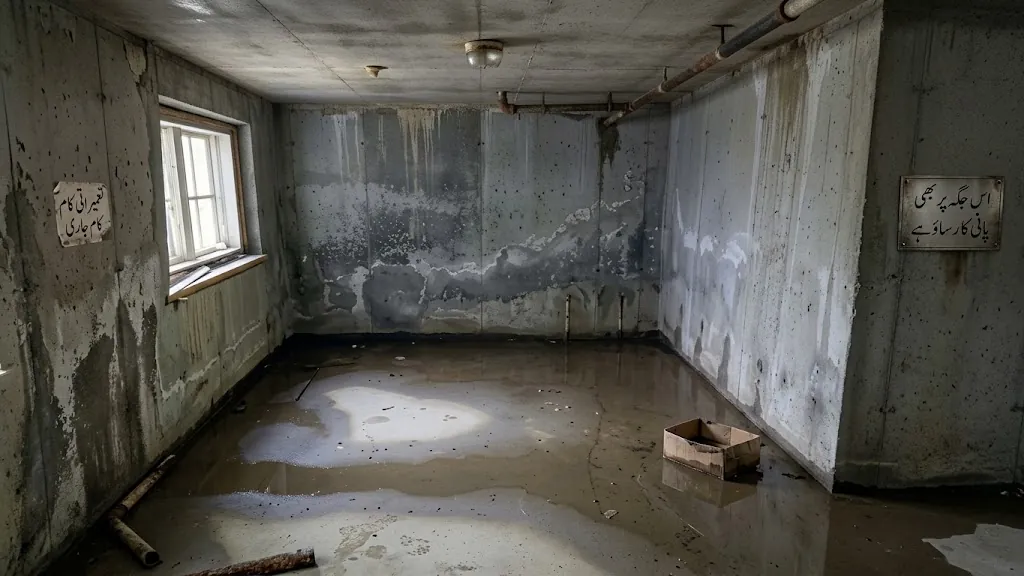
Nashua LeakDetectors has been in business since 2010, and foundation work has been part of our book from the start. Our technicians hold state-licensed plumbing credentials and carry Backflow Prevention Certification, so we understand how supply lines, drains, and foundation drainage interact. We have inspected thousands of basements and crawl spaces across Hillsborough County, from 1920s stone foundations on the Tree Streets to poured concrete walk-outs in Nashua Highlands. Every tech trains on RIDGID pipe inspection cameras, Fluke moisture meters, and FLIR thermal units before they run a call alone.
We had water on the basement floor every time it rained hard and two other companies told us we needed a full exterior dig. Nashua LeakDetectors found a failed cove joint in about an hour with a thermal camera. They sealed it from the inside for a fraction of the excavation quote. Three storms later, the floor is still dry.
Our water bill jumped by $140 a quarter and we could not find why. They pressure tested the line and isolated a pinhole in the copper under the slab. The acoustic gear put them within six inches of the leak. Repair was done in one day and the bill went back to normal the next cycle.
I manage six rental units and a wet foundation is always a tenant complaint. They inspected two buildings for me in the same week, gave me written reports with photos, and fixed the crawl space leak in one. Flat pricing made it easy to budget. I have them on speed dial now.
Most residential inspections run $250 to $450 in 2026, and the visit takes 60 to 90 minutes. Price depends on foundation type, how many rooms we need to sweep, and whether we run pressure testing on a buried line. If we cannot locate the source, you pay nothing. Repair pricing is quoted separately once we confirm the leak.
The three most common causes we find in Nashua are failed footing drains, freeze-thaw cracks in poured concrete, and pinhole leaks in copper pipe under the slab. Clay-heavy soil around French Hill and Crown Hill holds water against the foundation after heavy rain. If the leak follows a storm, it is usually drainage. If it runs constantly, suspect a supply line.
Often, yes. Hairline cracks and cove-joint seepage can be sealed from the inside with epoxy putty and hydraulic cement, and interior drainage can redirect water without digging. Full excavation is reserved for failed exterior footing drains or broken underground water lines. We tell you which category you are in before you approve any work.
Nashua LeakDetectors handles both detection and repair for homeowners across Hillsborough County. We are a state-licensed plumbing contractor with 16 years in business, and we carry the tools to confirm the source before we quote the fix. Call 603 571 4078 and we will schedule an inspection, usually within 24 to 48 hours.
Not seeing your question? Our local team can help you understand urgency, scheduling and what to expect.
Ask the local team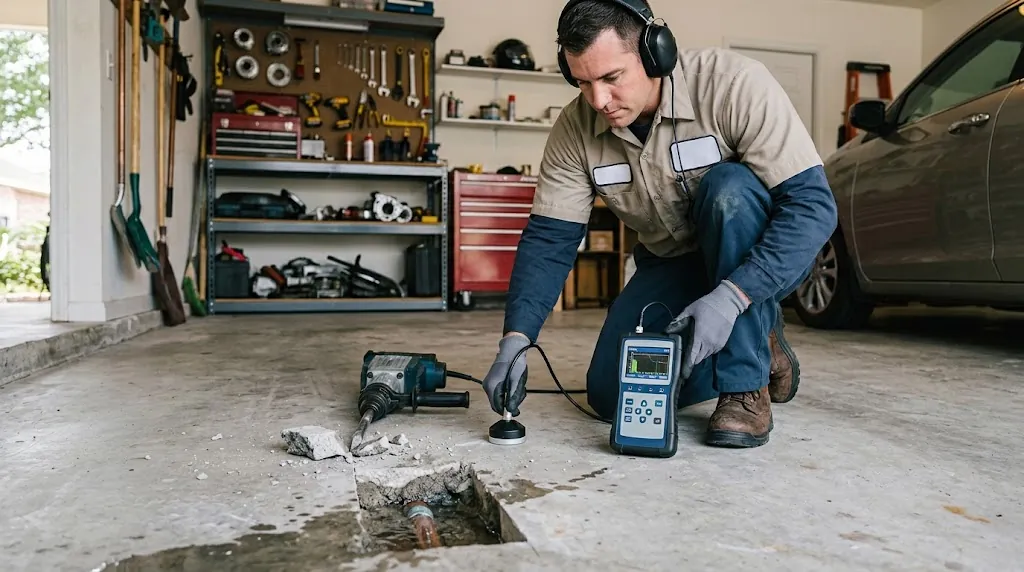
Homeowners across Nashua book residential leak detection when they see unexplained moisture but cannot trace it. We sweep the whole house, from supply lines to drains, and hand you a prioritized repair list. It pairs naturally with foundation work because water often travels before it shows.
View service
Nashua storefronts and office buildings on Main Street and Amherst Street need leak detection that works around business hours. We schedule early mornings or after close, use acoustic listening devices to avoid disruptive demolition, and document everything for your property records.
View service
A slab leak is the most common reason we get called for foundation leak detection in Nashua. Thermal imaging cameras and acoustic gear let us pinpoint the break under the concrete. We confirm with pressure testing before anyone touches a saw.
View service
Pool leaks and foundation leaks share symptoms: unexplained water, saturated ground, and rising bills. We use pressure testing gauges and dye testing to separate the two. If your pool is losing an inch a day, call us before you assume the foundation is at fault.
View service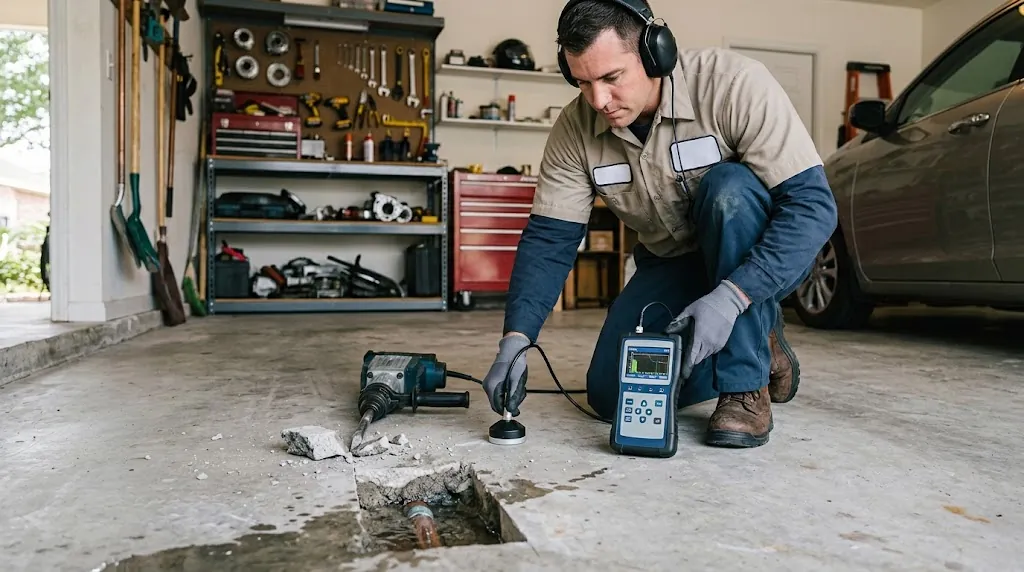
Call 603 571 4078 any hour, day or night, and a real person answers. We schedule same-day appointments for most leak calls in Nashua and the surrounding Hillsborough County area, and we confirm your window before we roll a truck.